
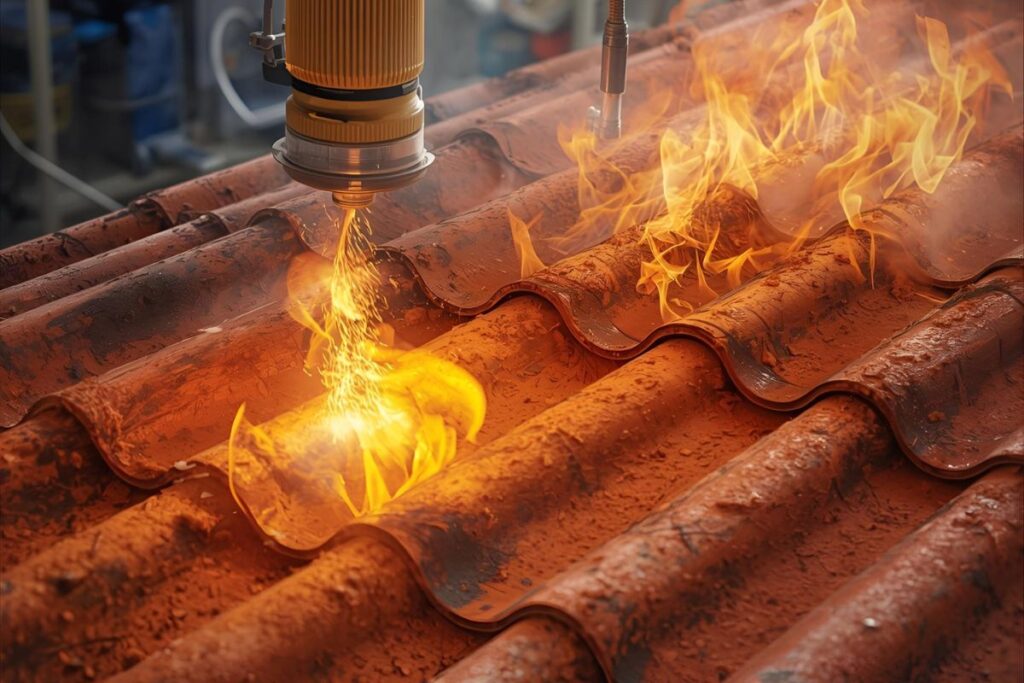
When it comes to true protection, picking the most fire-resistant roofing material for your home is important. With roof-related insurance claims in the U.S. surpassing $30 billion in 2024 and wildfire season becoming a yearly concern across the West, homeowners are now paying closer attention to roofing fire ratings than ever before. The correct roof can slow down the spread of fire, lessen the damage, and possibly make you eligible for insurance benefits.
This guidewill provide you with a basic summary of the several classes of roofing fire ratings, the best fire-resistant roofing materials, and the truth about popular systems like clay tiles, asphalt shingles, and others.
Quick Take: The Top Fire-Resistant Roofs
This is the order from best to worst for fire resistance: For natural resistance, the sequence is slate, clay tile, concrete tile, metal roofing, and class-A fiberglass asphalt shingles. People often say that these roofs are the greatest for fire protection since they don’t catch fire or are made to resist flames and embers.
What “Roofing Fire Rating” Actually Means
When people talk about roofing fire rating, they are talking about the Class A, B, and C systems used in tests when flames and burning embers are put on samples of roofing:
- Class A — highest protection (survives severe exposure). Recommended in wildfire-prone areas. Prevent flame spread for at least 2 hours
- Class B — moderate protection.
- Class C — minimal resistance.
A Class A roof is your best chance, but keep in mind that the classification is based on the whole assembly, not just the surface tiles. Local building laws and insurance companies in Nevada generally mandate Class A roofing, especially in locations that are marked as Wildfire Hazard Zones.
The Most Fire-Resistant Roofing Material Options for Nevada Homes
1. Slate — top tier
Slate is a natural stone. It weighs 800 to 1,500 pounds per square foot, costs $15 to $30 or more to install, and normally needs to be checked for structural integrity before installation. However, it is almost noncombustible and can endure 75 to 150 years. Slate is hard to beat when it comes to fire resistance.
2. Clay & Concrete Tile
Clay and concrete tiles are completely fireproof and usually get a Class A rating. They are very common in Mediterranean and Southwestern architecture, and they do a great job of protecting against ember attacks. They also last a long time and keep their worth, but they are weighty and demand a powerful deck.
Clay tiles are heavy (650 to 1,000 pounds per square foot) and cost a lot of money to install in Las Vegas ($12 to $25 per square foot). But if you live near Mount Charleston or Red Rock, where fires are more likely to happen, they’re worth every penny.
3. Metal Roofing
Steel, aluminum, and zinc panels or metal shingles don’t catch fire, reflect heat, and usually have a Class A rating when put on the right underlayment. Metal is light, strong, and often recommended for places where there is a risk of fire. Metal is a perfect middle ground if you want the greatest roof for fire protection that doesn’t cost too much during its lifetime.
4. Fiberglass-base Asphalt Shingles
Not all shingles are the same. Wood shakes that are traditional can catch fire (stay away from them in fire zones). But modern fiberglass asphalt composite shingles that fulfill Class A standards are far better.
5. Synthetic Composite Shingles
Synthetic tiles produced from engineered polymers can look like slate or shake and get Class A ratings. They are also lighter and cheaper to install (between $3 and $5 per square foot). If weight or looks are important to you, you should think about using new composites that are made to be fire retardants for roofing.
6. Built-up, Modified Bitumen & Membranes
When implemented with the right cover and protection, modified bitumen and built-up systems can work well on low-slope roofs in terms of fire safety. Different tests are done on single-ply membranes (TPO, PVC, EPDM). Check the manufacturer’s Class A ratings.
Fire retardant options and retrofits
If you already have a less resistant roof, you can still reduce risk:
- Install a Class A-rated underlayment and replace any rotting decking (fire can get through weak spots).
- Intumescent coatings and specific fire-retardant roof coatings can help safeguard wood shakes, but they are not a full replacement for materials that don’t catch fire.
- Ember guards, screens, and gutter coverings keep embers from getting stuck in eaves and gutters, which is a common way for houses to catch fire.
- Keep the area tidy by trimming plants and getting rid of leaves in valleys and gutters.
Search for products labeled or certified as fire retardant for roofs, and always confirm performance data.
Insurance and Financial Considerations
Beyond safety, your roofing fire rating directly affects your wallet:
Insurance Premiums: A lot of Nevada insurance companies will give you a 10–20% discount for Class A roofing. That’s a possible savings of $15,000 to $30,000 over the life of the roof.
Coverage Requirements: Some insurance companies won’t cover homes in high-risk areas unless they have Class A roofing. Others charge too much for anything less.
Property Value: Homes with fire-resistant roof tiles or other Class A materials cost more in locations where fires are common. People are putting more and more importance on fire safety when they buy things.
Replacement Costs: The U.S. roofing market was worth $31.38 billion in 2025 and is expected to be worth $42.33 billion by 2030. Material costs keep going up, so solutions that last longer and are more fire-resistant are becoming more appealing, even though they cost more up front.
Protect Your Home With the Right Fire-Rated Roof
There is only one thing that matters when it comes to picking the safest roofing material: real Class A protection put in the right way. Clay tile, concrete tile, metal, and high-quality Class A shingles all withstand fire well. However, the way you place them, the underlayment, and the ember-blocking elements are just as important as the material you choose. A short professional evaluation can help you compare choices depending on your home, structure, and budget without having to guess.
Rhino Roofing can assist you in figuring out what the finest fire-resistant roofing material is for your Las Vegas property. We have been protecting homes in Nevada for over 20 years. We can look at your current roof, tell you what materials are safest, and provide you with a simple plan to make your home safer from fire. Call us at (702) 805-8100 for a free, no-obligation roof inspection for fire safety.
FAQs
Q: Is a clay tile roof fire-resistant?
A: Yes. Clay tile roofs are noncombustible and are commonly rated Class A when installed correctly with appropriate underlayment and deck conditions.
Q: What are the most fire-resistant roofing materials?
A: Generally: slate, clay tile, concrete tile, metal roofing, and Class A fiberglass asphalt shingles. Slate and tile offer the highest passive resistance.
Q: Are roof shingles fireproof?
A: No roofing material is 100% fireproof, but Class A fiberglass shingles are highly fire-resistant and perform well in tests compared with wood shakes.
Q: Can I add a fire retardant for roofs to my current roof?
A: Some coatings and treatments increase resistance, but coatings are not a full replacement for installing a noncombustible Class A system. They can help as part of an overall strategy.
Q: Which is the best roof for fire protection if I’m on a budget?
A: High-quality Class A fiberglass shingles or metal roofing are cost-effective choices that provide strong fire resistance without the structural costs of slate or tile.
Q: How does fire rating affect insurance?
A: Many insurers lower premiums for Class A or noncombustible roofs. Check with your insurer for precise discounts and qualifying criteria.